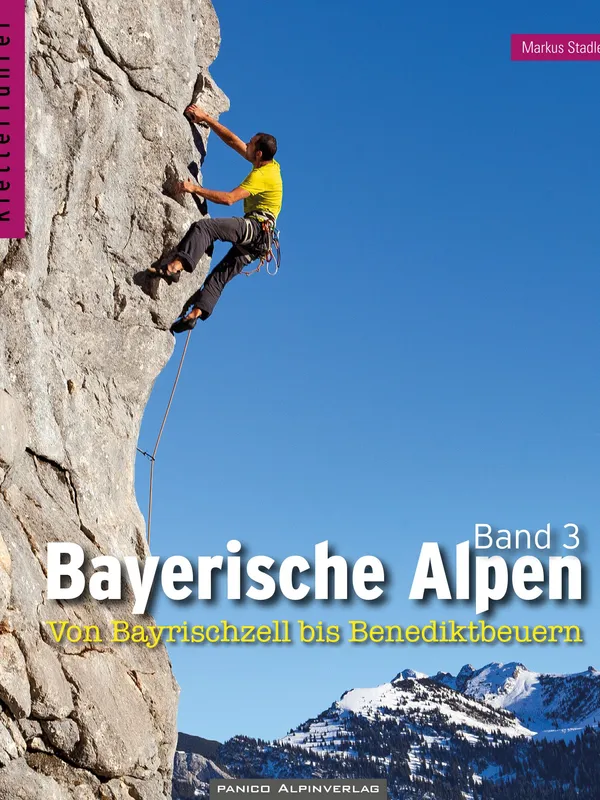
Kletterführer Bayerische Alpen Band 3
Scope and coverage
This third volume on the Bavarian Prealps focuses on the arc from Bayrischzell to Benediktbeuern—a classic Munich playground of Rätkalk limestone, forested ridges, and lake vistas. It spans long alpine routes and modern crags across five hubs: Benediktbeuern, Brauneck, Lenggries, Tegernsee, and Spitzingsee. Signature objectives such as Benediktenwand, Roß- und Buchstein, Plankenstein, and the Ruchenköpfe sit alongside friendly venues like Bad Heilbrunn and the sunny Krettenburg. The latest edition (2025) continues to blend traditional multi-pitch with well-bolted sport sectors, capturing the region’s breadth in one volume.
Structure and usability
The guide opens with practical chapters on how to use the book, grading, conservation, access/transport, geology, and local resources. Each area section follows a clear pattern:
- Overview text with character, seasonality, and style notes.
- Sector maps and photo-topos drawn by the author.
- Route tables listing length, grade, protection style, and remarks.
- Quick-glance data on aspect, elevation, sun exposure, and number/grade spread.
Conservation is a visible through-line: the guide carries the “Naturverträglich Klettern” seal and reinforces best practice. A three-year code unlocks the corresponding topos in the Vertical-Life app—handy for on-the-go navigation and updates.
Climbing content and quality
- Beginners and families: Bad Heilbrunn’s former sandstone quarry offers slabby, well-bolted lines on an easy base with many routes in grades 3–6; ideal footwork school.
- Sport cragging: Brauneck, Daffensteine, and Krettenburg provide sun, variety, and plentiful mid-grade pitches.
- Multi-pitch classics: Benediktenwand, Plankenstein, and Roß-/Buchstein deliver 100–300 m outings on generally solid limestone with fine positions and history.
- Alpine spice: At the Ruchenköpfe, expect superb rock but longer approaches and sections where the classics retain their character—nuts and small cams remain useful, and helmets are advised.
Photography is strong and informative, and the topos are crisp, consistent, and field-checked. Small cautions: popular training crags can be busy on fine weekends, and some historic lines keep wider bolt spacing.
Recommendation
A well-judged, field-driven climber’s guide that balances family-friendly cragging with proud alpine routes. For visitors to southern Germany and Munich-based climbers alike, it’s an authoritative single-volume companion to the Prealps, equally useful for first slab steps and committing multi-pitch days—with digital access as a welcome bonus.
Details
Extract- Activity
- Climbing
- Authors
- Markus Stadler
- Weight
- 700g
- Pages
- 372
- ISBN
- 978-3-95611-201-0
- Publisher
- Panico Alpinverlag