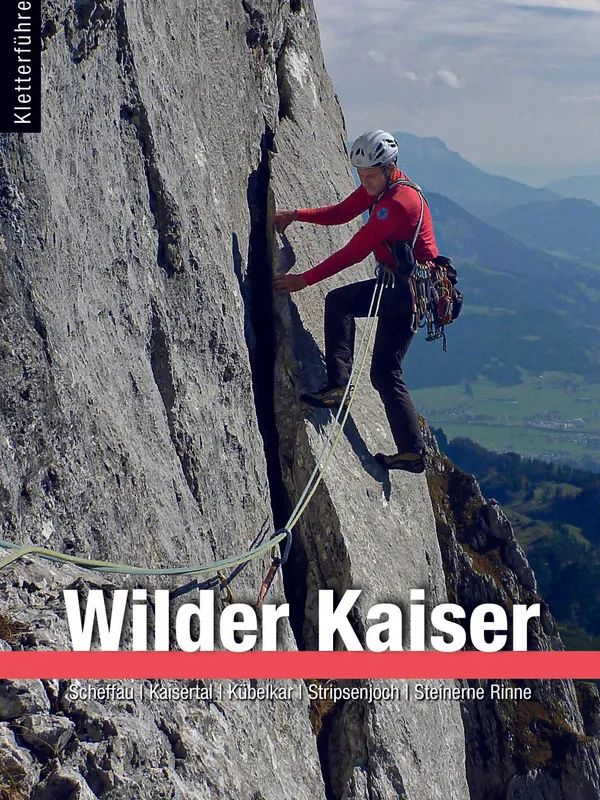
Alpinkletterführer Wilder Kaiser
Overview
This is a thorough alpine climbing guide to the Wilder Kaiser, blending the area’s historic testpieces with a modern, route-by-route refresh. Markus Stadler leans into the range’s dual identity: Dülferrouten and Wiessner-Rossi lines on big limestone walls coexist with popular, well-bolted multi-pitches like Via Classica or König der Löwen. The result feels both authoritative and current, acknowledging the renaissance brought by rebolting and new route development.
Coverage and structure
The book is organized by access hubs and huts, making trip planning intuitive. Major sections include:
- Kaindlhütte, Scheffau, Kaisertal, Gruttenhütte, Kübelkar
- Stripsenjoch and the Steinerne Rinne
- Ackerlhütte and Kaiserbachtal
Within each area you get approaches (including public transport notes), hut logistics, and clearly sequenced route lists that range from classic ridges to long, steep faces. Destinations span Sonneck, Treffauer, Ellmauer Halt, Fleischbank and Pfeiler, Predigtstuhl, Totenkirchl, Maukspitze, Westliche/Östliche Hochgrubachspitze, Lärcheck, Mitterkaiser, and more.
On-route guidance and topos
For an alpine guide, the mapping and topos are standout: consistent symbology, legible line drawings keyed to Alpenverein base maps, and route registers that help compare length, grade, and aspect at a glance. Historical classics (Dülfer an der Fleischbank, Kopftörlgrat, Kirchlexpress, Pumprisse, “Des Kaisers neue Kleider”) sit beside moderate crowd-pleasers and hard modern lines up to the 10/11 range. Protection notes are candid—expect “old-school” spacing on many alpine routes; the book flags where a light rack (cams/stoppers) remains essential.
Practicalities and usability
Approach times, descent options, and objective hazards are treated with the right level of detail (e.g., stonefall warnings near the Gamsängersteig; time commitment beyond the final pitch on Via Classica). Seriousness ratings help calibrate parties to terrain and commitment. The photography inspires without obscuring the information design. Where sheer route volume prevents exhaustive inclusion, Stadler points readers to his website for supplemental topos—an honest, pragmatic solution.
Verdict
A meticulous, field-ready reference that earns a spot in any alpine climber’s kit. It balances heritage and modernity, covers the range comprehensively, and gives enough nuance on protection, route character, and logistics to move confidently from Scheffau slabs to the big stone of the Steinerne Rinne. Highly recommended for first-time Kaiser visitors through seasoned “Koasa” devotees planning ambitious linkups.
Details
Extract- Activity
- Climbing
- Authors
- Markus Stadler
- Weight
- 700g
- Pages
- 504
- ISBN
- 978-3-95611-147-1
- Publisher
- Panico Alpinverlag